Beyond Automated Troubleshooting: The Path to True Autonomous Network Operations

I’ve been in RF optimization long enough to see it evolve from something very manual and field-heavy into something that is now increasingly driven by data and AI. When I look back, the fundamentals haven’t changed, but the way we approach them has evolved in ways I wouldn’t have imagined back then.
I started my journey back in the 2G days. Back then, optimization was as hands-on as it could get. After installing transceivers on a base transceiver station, we had to test them one-by-one. We used scanners, manually tuning into each frequency, making sure we could establish voice calls and that the audio quality was acceptable. It sounds simple, but it wasn’t. All of this had to be done during maintenance windows because you were directly impacting live service. The “automation” at the time? Mostly Excel macros to count GSM channels and help us organize data. That was cutting edge for us.
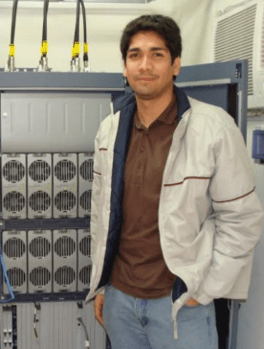
Things started to shift when I moved into 3G optimization around 2006. That’s when drive testing became a core part of the job. We would connect commercial phones and a GPS to a laptop and drive around collecting data. It felt more advanced, but it came with its own headaches. Keeping terminals connected, making sure logs didn’t drop, and validating data integrity was a constant struggle. Analysis was still very manual. We would go PSC by PSC (Primary Scrambling Codes), looking for pilot pollution. Areas with too much interference would degrade quality, so we had to carefully retune antenna parameters to clean things up. Then came the cycle: make changes, go back to the field, measure again. It worked, but it was slow and definitely not scalable. And if a VIP customer complained, you had to go out and try to reproduce the issue in real life. Not easy.
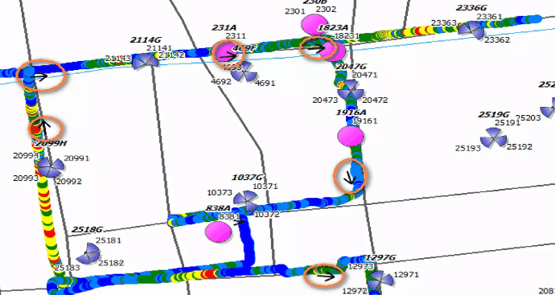
Around that same time, a major shift began with the introduction of call trace–based tools. Instead of relying only on field measurements, we could now analyze signaling data directly from the network. These traces captured the full control-plane interaction between devices and the network, including detailed RF measurements reported by the phones. This was a game changer. Suddenly, optimization didn’t require going out to the field for most use cases. We could analyze millions of calls instead of just a couple of test devices. That meant better statistical accuracy and much deeper insights. Even VIP complaints became easier to troubleshoot, we could see exactly what happened during their experience. And beyond RF optimization, this data opened the door to many other use cases: device analytics, roaming analysis, even inputs for marketing strategies. But looking back, this shift was even more significant than we realized at the time. This was not simply a better troubleshooting tool. It was the beginning of creating a continuously observed digital representation of how the network actually behaves. By correlating location intelligence traces with network KPIs, we were building a high granularity, near real-time ground truth, millions of data points painting an accurate picture of the real subscriber experience across the entire network. That geolocation enriched view of network reality would prove to be one of the most strategically important assets in the evolution that followed. The only problem? It was still largely manual.
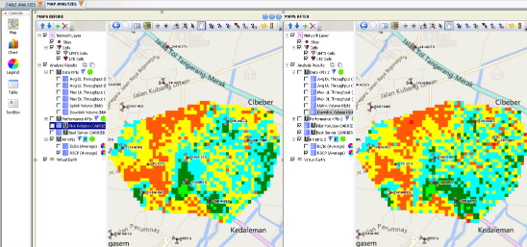
Over the last decade, tools started to improve. We moved from raw data analysis to more guided workflows. Software could automatically identify worst-performing cells or highlight key issues. Dashboards replaced Excel sheets, and visualization became much more intuitive. But there was always one lingering question from users: “Okay, now what?” The tools could show you the problem, but they didn’t always tell you what to do next. For a while, procedural automation tried to solve this: simple if-then logic to trigger actions. Rules like “if KPI X crosses threshold Y, change parameter Z” could automate human procedures, but they did not truly understand system-wide consequences. We were automating actions, but we were not yet automating understanding. The system could recognize a condition and trigger a response, but it could not reliably predict what that response would do to the rest of the network. And that is an important distinction, the difference between automation and autonomy. Networks are complex, and those rules rarely captured all edge cases. In many situations, they created as many problems as they solved.
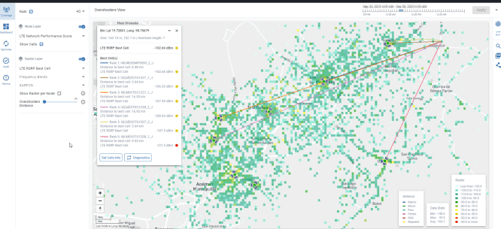
That’s where things have really changed in recent years. With generative AI, we finally have a powerful new way to address the “what do I do next?” question. AI can combine domain knowledge, network context, historical experience, and tool-specific expertise to propose actions and explain the reasoning behind them. These models lower the barrier to entry, allowing even less experienced users to interact with complex systems. They act like having a 3GPP savvy consultant next to you, one who can interpret data, suggest actions, and explain why. But recommendation is not validation. An LLM can reason and recommend, but how do we know the recommendation will actually work before we touch the live network?
And now we’re entering the next phase: agentic AI. This is where things get really interesting. Instead of just recommending actions, AI agents can actually execute them. They can follow best practices, use contextual information from the network, interact with multiple data sources, and even close the loop by implementing changes through controlled interfaces. What used to require multiple engineers, tools, and manual processes can now be orchestrated by intelligent systems. But simply giving an AI system the ability to diagnose a problem and execute a change is not enough on its own. The real question remains: how do we validate that the action is the right one before it hits the live network?
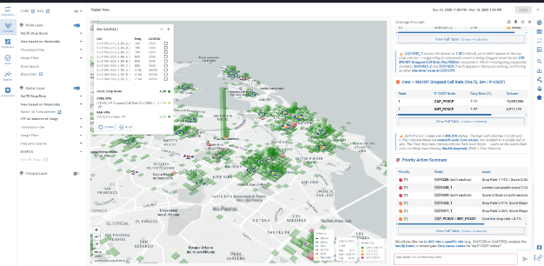
For decades, network optimization has essentially followed the same cycle: something happens, we observe it, diagnose it, make a change, and measure again. We have progressively automated each part of that process, but the fundamental model has remained reactive. The real breakthrough comes when AI can understand the network as a living system, predict the consequences of its decisions, and verify those decisions before they ever reach the production network. This is where the VIAVI Generative Reality Digital Twin (GRDT) changes the model entirely.
Imagine an AI agent detecting a decline in user experience. Instead of immediately changing a parameter, it first consults a continuously updated GRDT — a digital representation of the network built from topology, configuration, RF conditions, traffic, subscriber experience, mobility patterns, location intelligence, faults, performance data, and historical behavior. The Generative AI component of the GRDT generates several possible actions. Rather than simply choosing one based on a rule or an LLM recommendation, it tests those actions against the GRDT. The digital twin becomes a verification environment for AI decision-making. Only after the proposed action has been simulated, compared against alternatives, and validated against operational objectives does the agent act on the live network through controlled interfaces.
But the loop does not end there. After the change, the network is measured again. The AI compares the predicted outcome with the actual outcome. Did latency improve as expected? Did coverage change as predicted? Were there unintended consequences? That difference between prediction and reality becomes new knowledge. The GRDT learns. And the next decision becomes better.
This creates a fundamentally different operational loop: Observe → Understand → Recommend → Simulate → Verify → Act → Measure → Learn → Update the Twin → Repeat.
That is the transition from automated troubleshooting to true autonomous network operations. And this is also why the geolocation data collected from the network, traces, instruments, and third-party sources becomes even more strategically important. The richer and more continuously updated this data becomes, the more accurately the GRDT can represent the real network world view.
What once felt impossible is now becoming reality. And honestly, it feels like we are just getting started.