Implementing LEO-based Alt-PNT
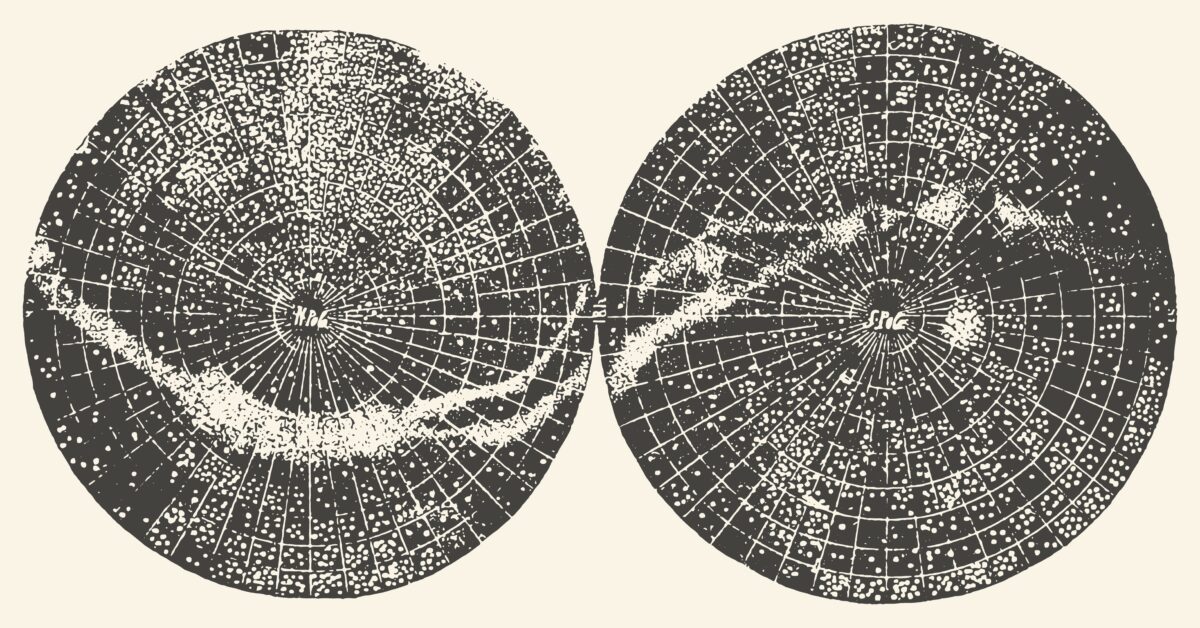
In 1714, the British Parliament passed the Longitude Act, offering a prize of £10,000 – 20,000 to anyone who could create a reliable method for determining longitude at sea.
While latitude could be calculated by the angle of the sun at midday, longitude was impossible until John Harrison completed his marine chronometer in 1735. This used a clock with linked, counter-oscillating balances that prevented the ship’s rocking motion from introducing inaccuracy and therefore allowed local time to be measured against a fixed point – typically the Greenwich Meridian (0o). Longitude was a timekeeping problem, which is also why precise timing sits at the heart of modern PNT.
A lot has changed in the intervening centuries, and especially since Navstar 1, the first satellite in the first Global Navigation Satellite System (GNSS), was launched in 1978*. But the ability to navigate and maintain accurate timing without GNSS signals is, if anything, even more critical today than it was in 1714.
GNSS signals are used for a countless array of positioning, navigation and timing applications, and are highly susceptible to jamming (overpowering of the signal), spoofing (using a fake signal with incorrect PNT data), and meaconing (relaying a genuine signal from somewhere else, or with a delay).
Interference is particularly prevalent around war zones, with the largest concentration of interference (as of October 2026) on the EU/Ukraine border with Russia, the Strait of Hormuz, the Kashmir mountains separating Pakistan and India, and the coast of Myanmar, which is undergoing a civil war.
This affects military, civilian, and commercial operations, degrading navigation for aircraft and ships and disrupting aid missions.
Added to this, GNSS timing signals are used in a raft of critical infrastructure applications, from electricity grids to radio broadcasts to financial transactions.
A lot of effort has therefore gone into improving the detection of attacks and mitigating their consequences. Spatial filtering CRPA antennas can be used to create blind spots to suppress jamming attempts. RAIM techniques can be used to cycle through subsets of available satellites (or constellations) to look for inconsistencies, although a coordinated spoofer that controls every channel can defeat them. And cryptographic authentication measures are being added to even civilian GNSS constellations.
LEO-based Alt-PNT
GNSS satellites, which sit in medium Earth orbit (MEO), offer the most accurate PNT signals currently available, but they are not the only source. Alternative PNT (ALT-PNT) sources provide position and time independently of GNSS
Being 20,000 km away, GNSS signals are below the thermal noise floor by the time they reach the Earth’s surface – hence, they are easy to overpower through jamming techniques.
Inertial systems such as MEMS accelerometers and gyroscopes offer a dead reckoning functionality that allow position to be calculated over time. These can be backed up through a vision-based mapping system that cross references geographic features against custom maps to reduce the effect of the MEMS sensors’ drift. Timing holdover can also be implemented through MEMS, rubidium or cesium oscillators. But in the absence of GNSS, more accurate data can be obtained through LEO-based Alt-PNT constellation such as Iridium’s (subject to a pending acquisition by Rocket Lab). Like GNSS, Iridium STL satellites broadcast L-band signals, and have included timing and positioning data via its Iridium STL service since May 2016.
LEO-based Alt-PNT is therefore a major topic of discussion and development. But (if I may use an analogy) when it comes to selecting technology for an operational platform, there is an important question: do you buy the engine or do you buy the car?
The Engine: An Embedded STL Reciever
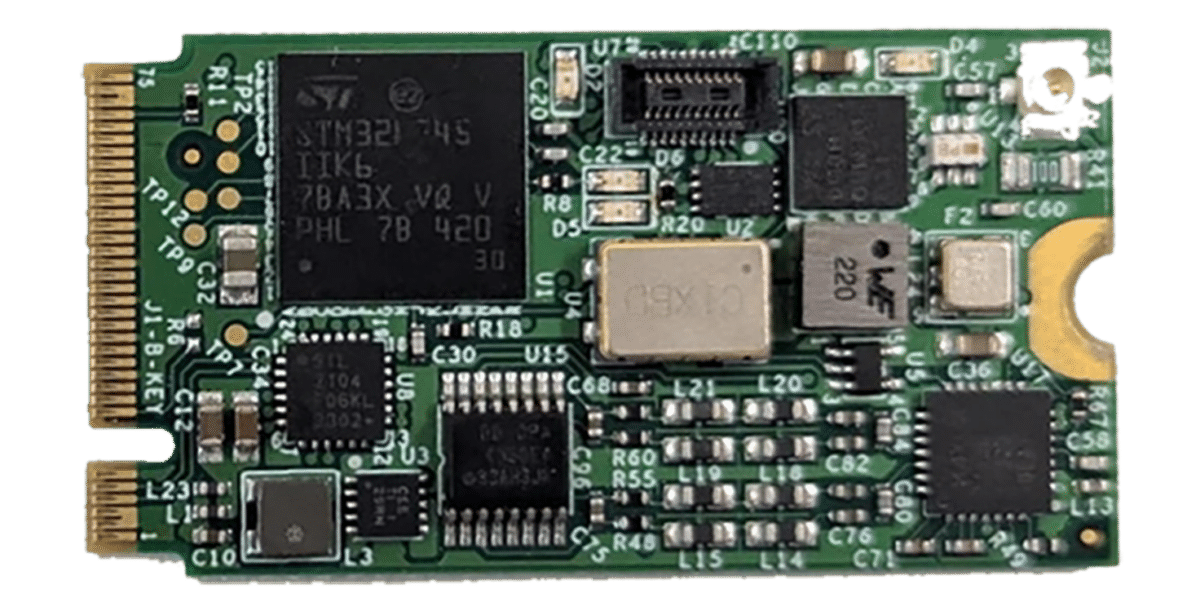
LEO-based Alt-PNT has been a key VIAVI offering for several years. For example, the VIAVI Secure µPNT™ STL-1000 is a small, highly reliable embedded PNT receiver that has been built on a field-proven STL architecture.
It uses an M.2 B-Key form factor (22 x 42 x 2.3 mm), weighs 3.6 g and consumes less than 1 W of power. Within this is a software-defined receiver that supports the Iridium LEO-based SecureTime™ STL service for PNT data when GNSS is degraded, disrupted or denied.
And to ensure security of supply, and the ability to work within sovereign manufacturing requirements, the devices are being manufactured at VIAVI’s facilities in the US, EU and UK.
The Car: System Engineering Expertise
Of course, the hardware is only part of the solution.
Just as one cannot expect a Ferrari engine to win the Le Mans 24-hour race without the right engineering expertise, one cannot simply connect an antenna to an Alt-PNT receiver and expect an accurate position. Antenna integration, RF performance, dynamics, signal processing, timing, holdover and the behavior of the complete PNT chain all play a crucial role in turning the received signal into an operational, resilient Alt-PNT capability. For this, VIAVI can help, building on almost 20 years of PNT experience from Jackson Labs, which was acquired in 2022. This expertise is backed by a broader resilient-PNT portfolio that spans embedded receivers, oscillators, transcoders, holdover clocks, PTP grandmasters and complete PNT systems.
Because VIAVI designs the receiver architecture, it is not limited to a single signal of opportunity. For example, VIAVI also delivers Alt-PNT services based on the Inmarsat geostationary (GEO) constellation, including an ITU-T G.8272.1-compliant ePRTC360+ holdover clock. If a program has another RF source to exploit, VIAVI can advise on its viability and work with the program team to create the front end and signal-processing architecture to support it.
The VIAVI’s Secure µPNT™ STL-1000 is available for demonstration. Click here for further information.
====
* The U.S. Navy also began development with the Transit program in 1959, but this was not global.