1.6T Pluggable Coherent Optics: Preparing for the Coherent-Lite Epoch
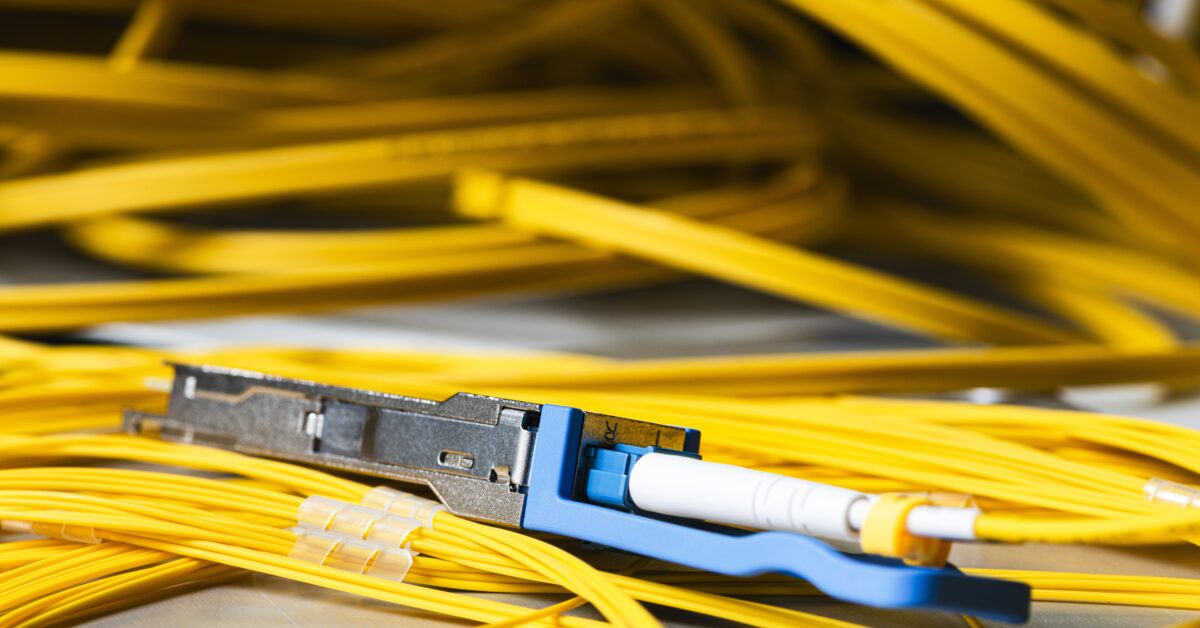
Pluggable coherent optics have come a long way in a short time. Coherent transmission once lived on custom line cards, engineered end-to-end at high cost in a closed ecosystem. CFP-based 100G coherent pluggables changed that, and since then a healthy multi-vendor ecosystem of coherent DSP, photonics, and module vendors has grown around common MSA and standards-based interfaces, steadily improving performance against aggressive price points.
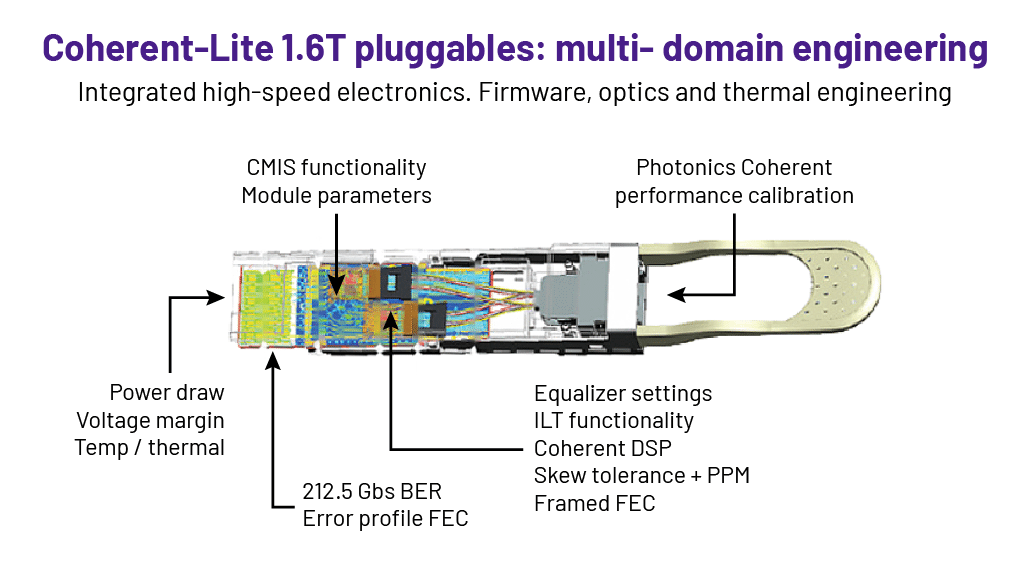
That evolution has already reshaped whole market segments. Data Center Interconnect (DCI) exists in its current form largely because pluggable coherent optics made it economically viable. Now, as the industry moves into the 1.6T generation, we are on the cusp of an even larger inflection point, one that pulls coherent optics into the data center itself.
For an in-depth look at the technology innovations enabling 1.6T pluggables, see our earlier blog “Anatomy of a 1.6T Module“.
Why 800G Isn’t the Same Story as 1.6T
As we push from 800G toward 1.6T, classic IMDD optics, the approach behind familiar formats like FR and DR run into real physics. Reach shrinks to under 10km, and 200Gb/lambda signaling leaves link margins thin. These aren’t problems better engineering quietly fixes; they change what’s architecturally viable.
The picture is further complicated by optical circuit switches (OCS), valued for the dynamically reconfigurable fiber topology they enable, but which introduce higher insertion loss and limited port radix. Conventional IMDD optics, already stretched at 1.6T, struggle to absorb that added loss, especially when applications require cascading multiple OCS stages.
Where Coherent Fits
Coherent detection is an elegant answer to the loss-budget problem. Coherent receivers recover the signal through interference with a local oscillator rather than raw received power, so they tolerate far more loss than direct-detect, making them a natural fit for OCS-based deployments.
In practice, the ZR-class coherent optics the industry has spent the last decade optimizing for metro and long-haul DCI are the wrong tool for this job. They carry more reach, DSP complexity, power, and cost than what an intra-data-center link needs, like using a delivery truck to run to the corner store.
That’s the gap addressed by coherent-lite. It sits between conventional IMDD and classic ZR coherent, optimized for the cost, power, and reach envelope data center applications actually require: a purpose-built category engineered to hit that sweet spot, at volumes that make sense for the interior of the data center.
What It Will Take to Get There
Coherent technology has moved from custom line cards to pluggable modules. One lesson has held at every generation: physics is rarely the hardest part. Executing at scale is.
At VIAVI, we’ve been embedded in coherent optics development and validation since the earliest custom line-card days through the emergence of pluggable coherent. Success rests on a few things that matter disproportionately, and coherent-lite will demand all of them at once, at a pace and volume coherent hasn’t seen before.
Time-to-market tops the list. Understanding coherent DSP, integrating it with the photonics, and tuning firmware for real performance are only the first steps. The harder problem is a production concept that scales with genuine demand.
That’s why VIAVI invests in and provides multi-domain tooling that treats coherent optics as a system, not a collection of parts. The photonic, digital/data, and control firmware domains must be tightly integrated, rather than tested in isolation and brought into alignment later, giving teams complete visibility as the product takes shape. That visibility turns a promising lab result into a product that ships at volume, compressing timelines and giving engineering an optimized path through test & validation.
A New Kind of Growth Curve
A recent forecast from 650 Group projects that the coherent-lite market will surpass 10 million units within the next three to five years. 1.6T coherent pluggables won’t just extend the trajectory of previous “ZR-only” generations; they’ll open an entirely new one. New applications inside the data center, built around OCS topologies and the flexibility they enable, stand to create markets that previously didn’t exist for coherent optics.
VIAVI has supported this industry’s validation needs as it moved from custom to pluggable, and from pluggable-for-the-edge to pluggable-for-everywhere. Coherent-lite looks like the next chapter in that same story.
As coherent-lite moves from concept to deployment, robust development, integration, and validation will be critical to success. Learn more about the test and validation approaches helping accelerate this transition with ONE LabPro.