2025 in Review: Accelerating Innovation in AI, Resilient Connectivity, Quantum, and Defense
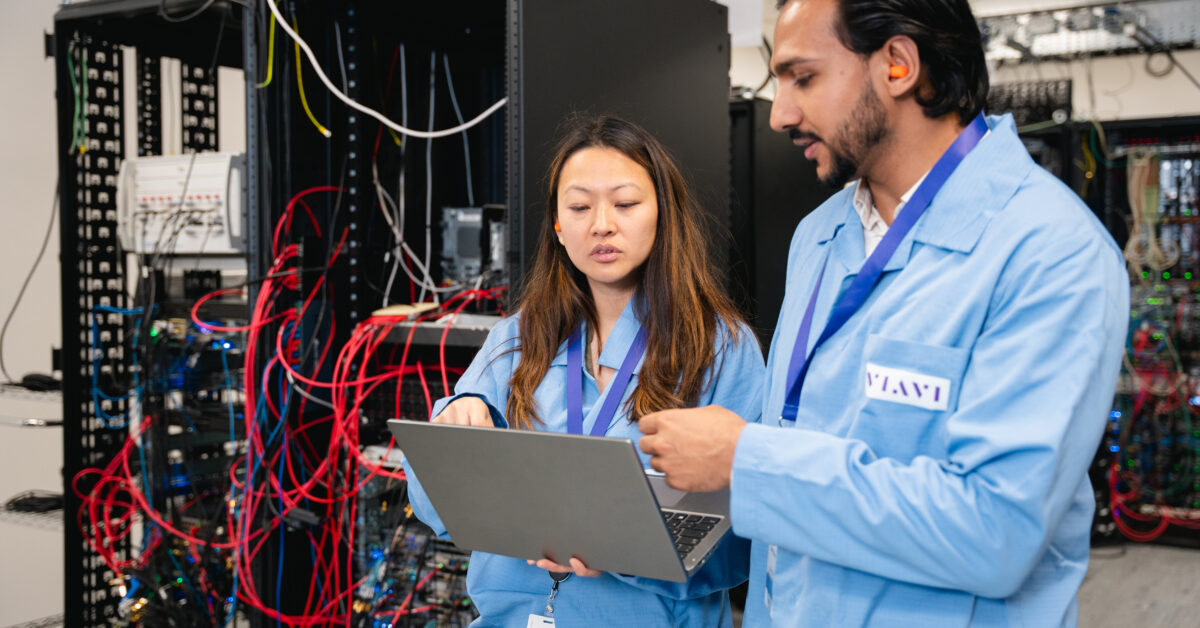
VIAVI has always been present at major inflection points across technology – and 2025 was no different. As we continued to engage with and support the telecommunications industry around the globe, we also reinforced our leadership in the data center ecosystem, aerospace, defense, and security sectors. In this blog, we review some of the breakthroughs from the past year.
AI Data Center Ecosystem
In AI data centers, our fiber testing technologies are being used to ensure the maximum possible throughput is delivered, with testing equipment for lab and production, High-Speed Ethernet and optical networks all playing a central role.
VIAVI’s acquisition of Spirent’s High-Speed Ethernet, Network Security and Channel Emulation Testing (HSE / NS / CE) business in October provides a complementary and synergistic product portfolio across ethernet, application performance, security, AI and digital infrastructure verticals. Combining Spirent’s market-leading high-speed Ethernet and security solutions with world-class VIAVI lab and production products will provide a comprehensive portfolio addressing layers 0 through 7. We look forward to sharing more in the new year.
VIAVI was the first to market with a 1.6Tb solution in 2024. This year, we expanded our ONE LabPro family for 1.6Tb testing. The new ONE-1600ER and ONE-1600IE modules deliver full Ethernet support based on the latest 802.3dj specification, including 1.6Tb, 8x200G testing essential for exercising and analyzing 200G lanes at 224G SERDES.
Innovations like multi-fiber connectors and hollow core fiber show promise for data centers and edge computing environments. Compared to single-mode fiber, hollow core fibers enable data to travel faster over significantly increased distances (up to c.125 km without amplification) and with reduced signal distortion. They also lower latency by 30%, chromatic dispersion by 70%, and attenuation rates by 65%.
Deploying HCF introduces a unique set of challenges that differ from conventional SMF installations. To address these challenges, modern test methodologies emphasize automation and comprehensive validation. Advanced OTDR variants are in development that enable HCF to scale beyond niche deployments and be certified with the same confidence as traditional fiber.
Resilient Networks and PNT
Position, Navigation and Timing (PNT) technologies are critical to everything from military operations to financial trading and power grids. In their current form, they are also highly vulnerable to attack. VIAVI plays a crucial role in making the technology more resilient and reducing the effects of an attack. Through the Inertial Labs acquisition in 2025, this year has seen several significant steps forward in this sector.
For example, in February, we unveiled the industry’s first edge grandmaster clock with 25G PTP and multi-orbit altGNSS resiliency. This was followed up just one month later with the launch of an anti-jamming CRPA system for assured navigation that is capable of operation across the L1, L2, and L5 GNSS band.
To give greater resilience to older systems, we also launched our second-generation RSR Transcoder for D3SOE environments, and a Visual-Aided Inertial Navigation System, which uses a mix of tactical-grade inertial MEMS sensors with vision systems to enhance flight path reliability even when GPS is removed completely.
Our year was capped when our team took first place in the U.S. Department of Defense CHALLENGE.GOV Electronic Warfare Realism Prize.
PNT and reality capture technologies are also critical in disaster recovery, and we are delighted to have worked alongside Hexagon │ NovAtel to help rebuild communities after the Lahaina fire.

Next-Generation Networks
Several wireless trends persisted throughout the year, including the shift to 5G-Advanced and 6G research. A range of core technologies underpin these industry shifts, including AI-native architectures and open, disaggregated and interoperable networks. For increased throughputs, technologies such as Massive MIMO and the introduction of 6 GHz bands to create a possible 200 MHz of mid-band TDD spectrum per operator are increasingly being used.
VIAVI plays a key role in enabling these evolutions. For example we kicked off the year with the launch of our TeraVM AI RAN Scenario Generator, which is capable of generating massive-scale digital twins and simulating up to 10,000 devices to train and validate AI/ML algorithms without risking live network operations. We partnered with Hanyang University to advance AI-RAN, 5G and 6G research through the university’s Beyond-G Global Innovation Center.
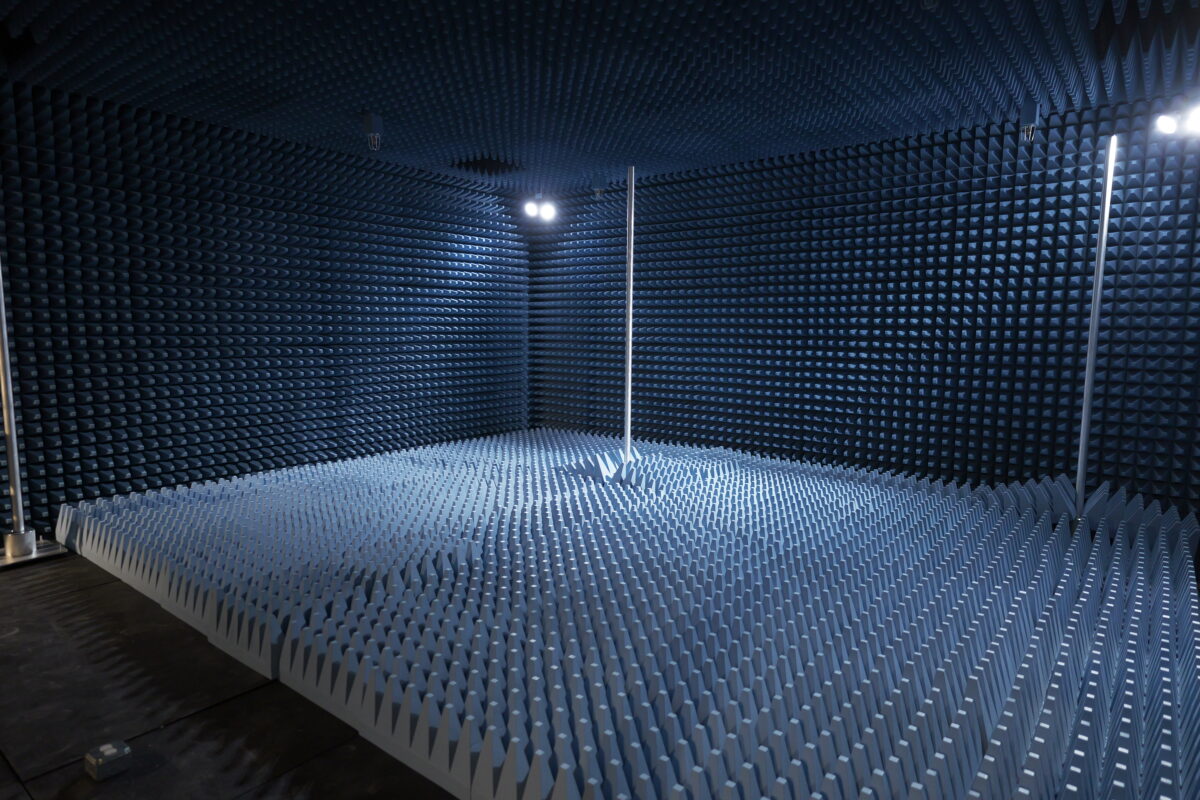
Turning to Open RAN, we have expanded our VALOR™ facility, which is funded by the U.S. National Telecommunications and Information Administration (NTIA) Public Wireless Supply Chain Innovation Fund, with an RF chamber enabling the industry’s first Test-as-a-Service offering for Massive MIMO OTA testing. VALOR also successfully completed product validation for multiple vendors including end-to-end OTA validation and introduced colocation capability to enable longer-term engagement. VALOR has also been designated as the first AI-RAN Alliance lab in a strategic initiative focused on integrating AI into RAN technologies.
In addition, our partnership with Calnex on pre-certification testbeds enables O-RU, O-DU and O-CU equipment manufacturers to simplify the process and lower the cost of developing in-house Open RAN testing for pre-certification validation.
The complex nature of 5G-Advanced and 6G technologies , and their reliance on costly systems such as non-terrestrial networks make digital twin technologies essential in the launch and operation. From 5G-A and 6G to V2X, implementation of digital twins can benefit network equipment manufacturers and mobile operators when used in R&D acceleration, site deployment automation, as well as spectrum and energy optimization.
Quantum and High Performance Computing (HPC)
We are rapidly approaching the date where quantum computers will be capable of breaking elliptic curve-based encryption. VIAVI is uniquely positioned thanks to decades of leadership in fiber optics combined with advanced quantum research. With over 30 years of experience in systems, physics, and lab validation, VIAVI offers a rare perspective on how to securely and efficiently transition photon-based communication from the lab to practical deployment. Read more in our blog.
In December, we partnered with QNu Labs to accelerate quantum-safe network security, developing test cases, frameworks and standards to protect critical infrastructure from quantum threats.
Another key trend in HPC is the introduction of the Ultra Ethernet standard and we recommend our blog on what Ultra Ethernet means for AI and HPC networks, which examines the highly anticipated UE Specification 1.0 and explores if the reality matches hype.
Enterprise IT
As outlined in our State of the Network Study, the industry’s desired shift to NetSecOps continues to be a key trend in 2025 and beyond. This year, we announced a partnership with Crowdstrike to integrate our Observer platform into the CrowdStrike Falcon® next-generation SIEM, which provides joint customers with deeper visibility across their security and IT operations. For those heading to the RSA Conference in March, we look forward to seeing you there.
As the Network Operations Center (NOC) undergoes transformation, traditional tools are no longer sufficient to manage modern IT operations with multi-cloud, multi-technology, multi-domain and multi-vendor environments. AI-driven automation helps address these challenges with intelligent operations and redefine efficiency and reliability. In 2025, VIAVI’s NITRO® AIOps went live in TDC NET”s Telco Data Center domain as part of their transformation program. With the deployment of this cloud-native AIOps platform, TDC NET takes a leap towards intelligent automation, operational agility, and a future-ready network.
Optical Security and Performance
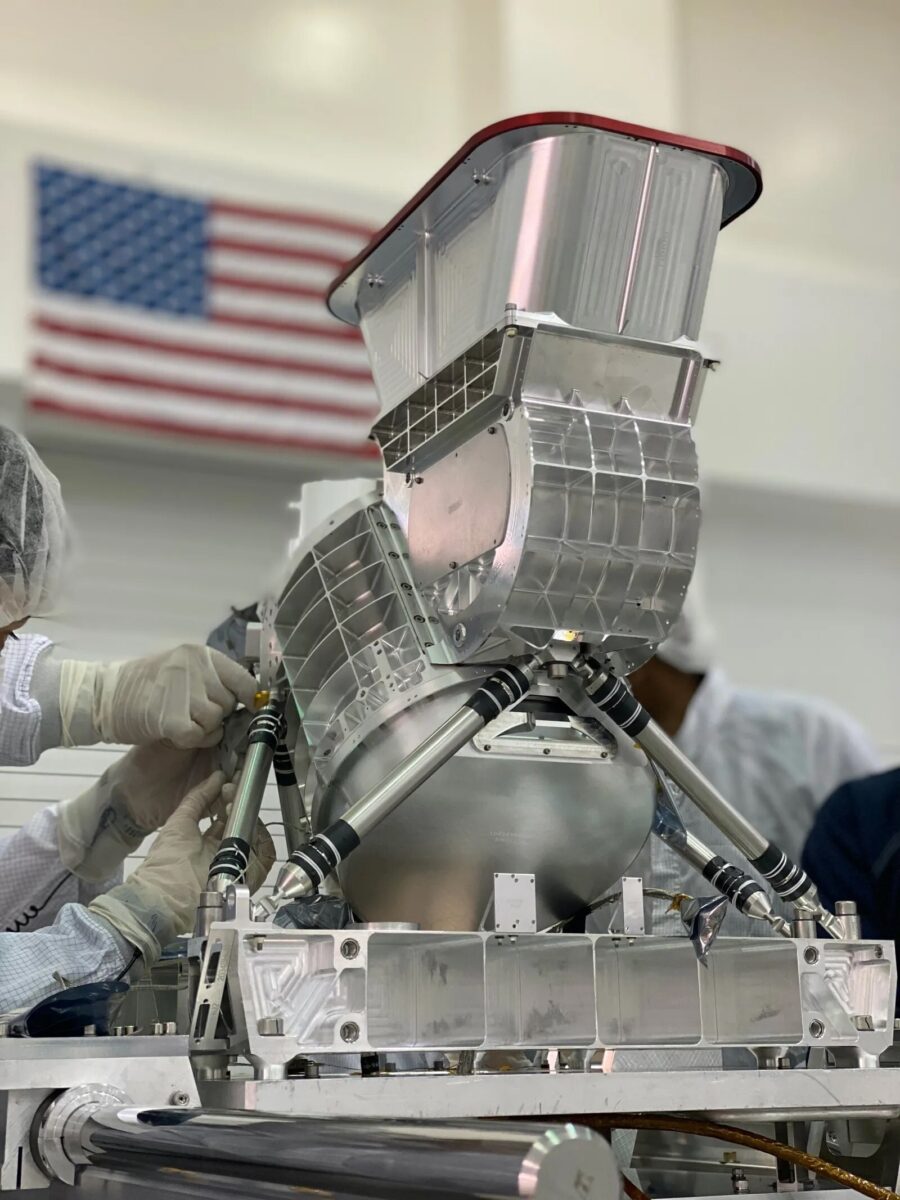
Finally, we’re delighted to highlight the work we’re doing with NASA and this year has seen VIAVI delivers precision components for NASA’s Europa Clipper mission to analyze the surface composition of Jupiter’s moon and determine its habitability. Our optics are also playing a key role in NASA’s groundbreaking SPHEREx mission.
Looking Ahead to 2026
Through our ongoing collaboration with customers and partners, VIAVI will continue to enable groundbreaking discoveries and technologies that change the way we live and work.
To our customers, partners, and teams, thank you for the trust, collaboration, and relentless focus on innovation. We look forward to achieving great things together in 2026!